AA-3D: Interactive 3D Experience Benchmark

AA-3D
Cost per Task
Output Tokens Used
AA-3D Leaderboard
Range | Model | Elo | |
|---|---|---|---|
| 1 | 1 |  Claude Fable 5.2 (Max, Default Fallback) | 1271±2595% interval 1246 to 1297 |
| 2 | 2-3 | Claude Sonnet 5.5 (Max, Default Fallback) | 1204±2895% interval 1176 to 1232 |
| 3 | 2-3 | Claude Opus 5.5 (Max, Default Fallback) | 1202±2895% interval 1174 to 1231 |
| 4 | 4-5 |  GPT-6 Astra (Max) | 1168±2895% interval 1141 to 1196 |
| 5 | 4-8 |  Gemini 4 Argon (High) | 1147±3095% interval 1117 to 1176 |
| 6 | 5-9 | Claude Fable 5.1 (Max, Default Fallback) | 1139±2895% interval 1111 to 1167 |
| 7 | 5-9 | GPT-6 Sol (Max) | 1131±2795% interval 1104 to 1159 |
| 8 | 5-9 | GPT-6.1 Sol (Max) | 1121±2895% interval 1093 to 1149 |
| 9 | 6-9 |  Kimi K3.1 Pro | 1112±2995% interval 1083 to 1141 |
| 10 | 10-11 |  Muse Spark 1.3 (Max) | 1032±2795% interval 1005 to 1058 |
| 11 | 10-14 |  Inkling 2 Small | 1027±3795% interval 990 to 1065 |
| 12 | 12 | GPT-6 Luna (Max) | 1000AnchorFixed at 1000 as the reference point for this board's Elo scale. |
| 13 | 12-17 | Claude Haiku 5.5 (Max) | 998±2795% interval 971 to 1025 |
| 14 | 12-17 |  Grok 4.7 (Xhigh) | 992±2795% interval 966 to 1019 |
| 15 | 12-17 | Kimi K3 (Max) | 984±2895% interval 957 to 1012 |
| 16 | 12-17 |  MiMo-V2.6-Pro | 983±2795% interval 956 to 1010 |
| 17 | 12-18 | Gemini 3.8 Flash (High) | 974±2795% interval 947 to 1001 |
| 18 | 17-19 |  Qwen3.8 Max (0902) | 954±2795% interval 927 to 981 |
| 19 | 18-19 |  GLM-5.3-Flash | 937±2795% interval 910 to 965 |
| 20 | 20-21 |  Mistral Large 4 Preview | 882±2795% interval 855 to 910 |
| 21 | 20-21 |  Step 5 Preview | 859±2895% interval 831 to 887 |
| 22 | 22 | GLM-5.3 (Max) | 794±3095% interval 764 to 823 |
| 23 | 23 |  MiniMax-M3 | 746±2995% interval 716 to 775 |
| 24 | 24-25 | Inkling (Xhigh) | 591±3695% interval 555 to 627 |
| 25 | 24-25 |  Nemotron 3 Ultra 550B A55B (Reasoning) | 583±3995% interval 544 to 621 |
AA-3D Elo
AA-3D Elo
AA-3D: Elo vs. Cost per Task
Pick a domain, a task and a model to load the scene that model built.
Task
Model
Create an interactive adult man performing weightlifting exercises, with views that expose his muscles, skeleton and organs in anatomically accurate form.
25 of 25 models have a scene for this task in blind voting.
Elo vs. Intelligence Index
AA-3D Elo vs. Intelligence Index
Win Rate by Domain
Each cell shows the share of votes a model won in one task domain, from the votes behind the current leaderboard. The opponent-balanced view takes the mean of the model's win rates against each opponent in the domain, so every opponent counts equally.
AA-3D Win Rate by Domain
Cost
AA-3D: Cost per Task
Token Usage
AA-3D: Output Tokens per Task
Turns per Scene
AA-3D Turns per Scene
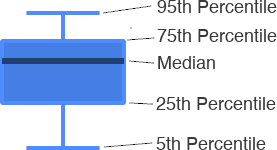
Tool Use
AA-3D Tool Calls per Scene
How AA-3D Works
Each model works as an agent in an offline sandbox. It gets a written brief for one interactive scene, plus a delivery contract that every task shares. It writes code, renders the scene, looks at its own screenshots and revises. The sandbox has Blender, Rapier physics, Python, a headless browser and a library of CC0 assets. A run stops after three hours or 250 turns, and the result is an index.html page that runs the scene in a browser.
Inside an Agent Run
These replays use the AA-3D launch data. Pick a task to replay every model's run on a shared clock. Hover over a lane to see each action, and click it to see where the time went.
Watch a Scene Being Built
Score vs. Release Date
AA-3D: Score vs. Release Date
Frequently Asked Questions
AA-3D v1.0 measures how well AI models build interactive 3D experiences. Each model receives a written brief and builds a single web page with three.js in an offline sandbox. The benchmark has 55 tasks across 7 domains. Read the AA-3D methodology
Models are ranked using an Elo rating system derived from blind comparisons judged by our recruited human panel. Panelists interact with two scenes built for the same task and choose the one they prefer, without knowing which model built which. Higher Elo scores indicate a model is preferred more often. Try AA-3D Voting
Explore Evaluations
 Artificial Analysis Intelligence Index v5.0.1
A composite benchmark aggregating nine challenging evaluations to provide a holistic measure of AI capabilities across knowledge work, coding, science, and general knowledge.
AA-Briefcase v1.1: Agentic Knowledge Work BenchmarkA private evaluation developed by Artificial Analysis for frontier agentic capability in long-horizon knowledge work, testing agents on realistic business workflows that require deliverables such as spreadsheets, presentations, and memos.
AA-3D: Interactive 3D Experience BenchmarkA benchmark developed by Artificial Analysis for how well AI models build interactive 3D experiences. Models work as agents in an offline sandbox via Stirrup to turn a written brief into a three.js scene, with Elo ratings derived from blind pairwise votes.
 APEX-Agents-AA Benchmark
Artificial Analysis' implementation of the APEX-Agents benchmark, testing AI agents on long-horizon, cross-application tasks in professional-services environments with realistic application tooling.
AA-AnalystAgent BenchmarkArtificial Analysis' data analysis benchmark, testing AI agents on their ability to work with spreadsheets and documents to answer quantitative questions a Business Analyst or Data Analyst would face day-to-day.
 AutomationBench-AA: Agentic SaaS Workflow Benchmark
A benchmark measuring agentic task completion across simulated SaaS application environments, scoring the share of each task's objectives completed without guardrail violations.
 Harvey LAB-AA v1.1 Benchmark
Artificial Analysis' implementation of Harvey's Legal Agent Benchmark (LAB), testing AI agents on real-world legal work from Harvey's dataset of 120 private tasks spanning 24 legal practice areas. v1.1, built in collaboration with Harvey, checks every deliverable against the task's source documents for hallucinations, so work that passes every rubric criterion but contains a material hallucination receives no credit. A panel of three judges grades each deliverable criterion-by-criterion.
 GDP.pdf Benchmark
Artificial Analysis' implementation of Surge AI's GDP.pdf benchmark, testing whether language models can reason over long, real-world professional documents and satisfy detailed task-specific criteria.
 EnterpriseOps-Gym-AA Benchmark
Artificial Analysis' independent implementation of ServiceNow's EnterpriseOps-Gym, an agentic benchmark testing whether LLM agents can complete stateful, multi-step enterprise workflows across eight business domains via live tool use, graded on the final state of the underlying databases.
 Terminal-Bench 4.0 Benchmark
A harder 66-task benchmark of complex terminal work across software, machine learning, science, operations, security, hardware, and media, with recalibrated compute and time allowances and improved instructions, environments, and verifiers.
 Terminal-Bench-Science 0.1 Benchmark
A 70-task benchmark of research workflows authored and reviewed by domain experts across the life, physical, earth, mathematical, and engineering sciences, each completed in a terminal and checked by its own set of tests.
 FrontierCode-AA 2.0 Benchmark
Artificial Analysis' implementation of Cognition's FrontierCode 2.0, a private agentic coding benchmark of 132 tasks in real open-source repositories, graded on whether a maintainer would merge the agent's change.
 HLE-Diamond Benchmark
A refined and updated 1,000-question set of Humanity's Last Exam, split evenly between reasoning and knowledge questions, with 272 questions that include an image.
AA-PersonalityBench: AI Personality & Communication Style BenchmarkMeasures how models communicate rather than whether they are correct: 30 judged personality traits rolled up into 8 indexes, plus 21 measured communication characteristics.
AA-Omniscience v1.1: Knowledge and Hallucination BenchmarkA benchmark measuring factual recall and hallucination across various economically relevant domains.
The most challenging 198 questions from GPQA, where PhD experts achieve 65% accuracy but skilled non-experts only reach 34% despite web access.
 ITBench-AA Benchmark
Artificial Analysis' implementation of IBM's ITBench benchmark, testing AI agents on Kubernetes incident root-cause analysis from offline incident snapshots. The agent inspects alerts, events, traces, and topology and identifies the contributing-factor entities (deployments, pods, namespaces, network policies, etc.) responsible for the failure.
 MMMU-Pro Benchmark
An enhanced MMMU benchmark that eliminates shortcuts and guessing strategies to more rigorously test multimodal models across 30 academic disciplines.
 IFBench Benchmark
A benchmark evaluating precise instruction-following generalization on 58 diverse, verifiable out-of-domain constraints that test models' ability to follow specific output requirements.
 MLCR-AA: Medical Long Context Reasoning Benchmark
An open benchmark from Wisedocs measuring how well models reason over long, fragmented medical records, performing the multi-document synthesis claims professionals rely on when reviewing insurance and healthcare cases.
 Code2Video-AA Benchmark
Artificial Analysis' implementation of HeyGen's Code2Video Bench, evaluating how well models create short product and brand videos from 114 design briefs using HyperFrames HTML.
HealthBench BenchmarkOpenAI's HealthBench: 5,000 health conversations graded against physician-written rubrics, from emergency referrals to global health.
 CritPt v2 Benchmark
CritPt v2 is the revised version of CritPt, a benchmark designed to test LLMs on research-level physics reasoning tasks, featuring 70 composite research challenges. Models solve problems with a code-execution tool in an offline Linux sandbox.
 VIALS-AA Benchmark
VIALS-AA is Artificial Analysis' implementation of Handshake AI's VIALS benchmark. It tests whether language models can interpret scientific images and answer questions about the evidence they contain.
 Multimodal Knowledge Agent (MKA) Benchmark
Artificial Analysis' implementation of Google DeepMind's Multimodal Knowledge Agent (MKA) benchmark. It tests whether agents can read visually dense project files, such as architectural drawings, engineering schematics and clinical scans, and produce the deliverables a professional would.
GDPval-AA v2.1 BenchmarkGDPval-AA v2.1 is Artificial Analysis' evaluation framework for OpenAI's GDPval dataset. It tests AI models on real-world tasks across 44 occupations and 9 major industries. Models are given shell access and web browsing capabilities in an agentic loop via Stirrup to solve tasks, with Elo ratings derived from blind pairwise comparisons.
 𝜏³-Banking Benchmark
A fintech customer-support benchmark from the 𝜏-Knowledge framework that tests whether agents can navigate a large unstructured knowledge base and execute multi-step tool calls to resolve realistic banking workflows.
Terminal-Bench 2.1 BenchmarkA verified refresh of Terminal-Bench 2.0: 89 curated tasks across software engineering, system administration, data processing, model training, and security, with environment and instruction fixes so scores reflect agent capability rather than environment gaps.
FrontierCode 1.1 BenchmarkArtificial Analysis' implementation of Cognition's FrontierCode 1.1, a private agentic coding benchmark that tests models on completing coding tasks in a way that would actually get merged by maintainers of real-world repositories.
AA-LCR v1.1: Long Context Reasoning BenchmarkA challenging benchmark measuring language models' ability to extract, reason about, and synthesize information from long-form documents ranging from 10k to 100k tokens (measured using the cl100k_base tokenizer).
 SciCode Benchmark
A scientist-curated coding benchmark featuring 288 test set subproblems from 80 laboratory problems across 16 scientific disciplines.
Humanity's Last Exam BenchmarkA frontier-level benchmark with 2,500 expert-vetted questions across mathematics, sciences, and humanities, designed to be the final closed-ended academic evaluation.
CritPt BenchmarkA benchmark designed to test LLMs on research-level physics reasoning tasks, featuring 71 composite research challenges.
Terminal-Bench Hard BenchmarkAn agentic benchmark evaluating AI capabilities in terminal environments through software engineering, system administration, and data processing tasks.
𝜏²-Bench Telecom BenchmarkA dual-control conversational AI benchmark simulating technical support scenarios where both agent and user must coordinate actions to resolve telecom service issues.
 MMLU-Pro Benchmark
An enhanced version of MMLU with 12,000 graduate-level questions across 14 subject areas, featuring ten answer options and deeper reasoning requirements.
 LiveCodeBench Benchmark
A contamination-free coding benchmark that continuously harvests fresh competitive programming problems from LeetCode, AtCoder, and CodeForces, evaluating code generation, self-repair, and execution.
MATH-500 BenchmarkA 500-problem subset from the MATH dataset, featuring competition-level mathematics across six domains including algebra, geometry, and number theory.
 AIME 2025 Benchmark
All 30 problems from the 2025 American Invitational Mathematics Examination, testing olympiad-level mathematical reasoning with integer answers from 000-999.
 Global-MMLU-Lite Benchmark
A lightweight, multilingual version of MMLU, designed to evaluate knowledge and reasoning skills across a diverse range of languages and cultural contexts.